Edited by Cade Kuznia and Boyana Nikolova
Cover Photo by Mehek Saini
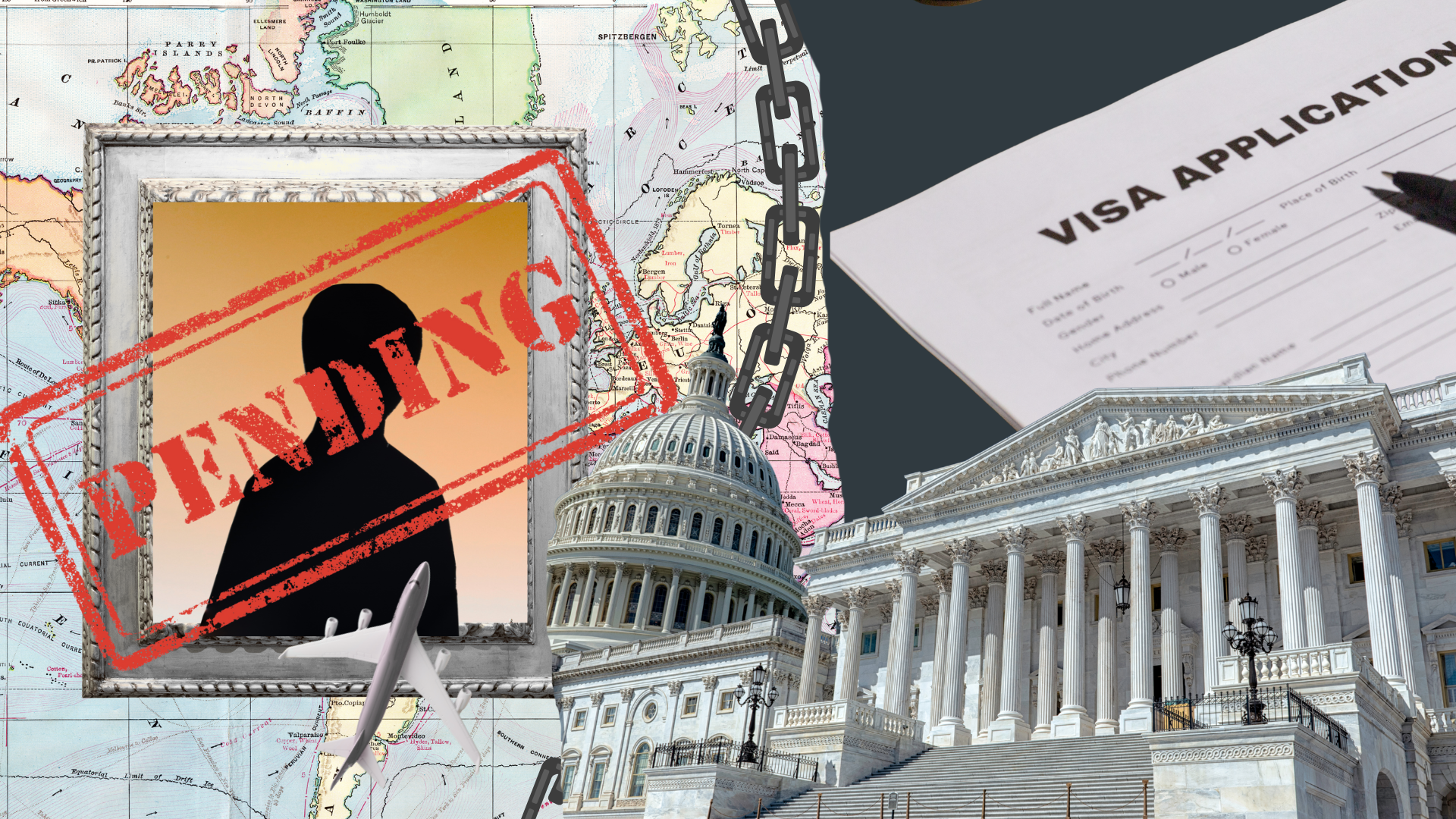
In 2023, an asylum seeker in the U.S. waited over two years before being granted permission to work. Throughout those two years, she survived on borrowed money and avoided various systems, like the healthcare system, for fear of deportation and high costs. Every week, she checked the status of her case and was continuously met with one word: pending. Her story is not “tragic enough” to make headlines, but it’s the experience of thousands of people navigating the immigration system across the country.
Immigration narratives in the United States are framed through crisis and eventual resolution: jarring detention, family separations, or the triumphant fulfillment of the “American Dream.” What many modern media outlets overlook is the in-between: the long, frustrating waiting periods, the extensive eligibility paperwork, and the uncertainty of whether government bodies will provide a future.
For many asylum seekers, immigration is not defined by a single moment; it’s defined by waiting. Employment is unstable, legal statuses remain unresolved, and their daily lives are shaped by constant questioning of the future. Despite not being adequately represented in the media, this situation defines the reality of millions within the U.S. immigration system.
Mohammed “Mo” Amer thrives in the middle, one of millions of immigrants stuck in the in-between.
In his Netflix series Mo, he follows the story of a family of Palestinian refugees living in Houston. They’re struggling with an open asylum case, unreliable employment, and issues balancing their personal values and culture with those of their friends and surrounding community. Amer draws from his personal experiences to encapsulate this semi-autobiographical story: Amer is a refugee from Kuwait living in Texas, and he also endured the lengthy wait for his legal status.
However, Mo’s topicality is not what makes this show important. Rather, it’s the way it tries to present the genuine refugee and immigrant experience, with some comedy and social commentary as a digestible narrative for the average viewer. This is evident not only through the plot alone, but also through the characters. The protagonist, Mo Najjar, is all but perfect. He struggles with addiction, selfishness, and a surplus of dishonesty. The complexity of Mo Najjar is exactly what society needs: a real, imperfect, humanizing portrayal of a refugee. Mo’s crossover between the immigrant, specifically the refugee, experience also conveys a critical political message about the morality of detention, a theme that has been missing in American television.
Through this portrayal, Mo flows against the two misconceptions about asylum seekers and citizenship seekers in the media. First is the victim narrative. Refugees and immigrants are often viewed as silent bystanders, fearing advocacy to protect their future. Then, there’s the wild genius narrative. This includes the individuals who work “against all odds” to become extraordinary contributors to society. These narratives mold immigrants into symbols for society, rather than the painful reality of our policies and morals. To overcome this, Mo Najjar is a painfully normal character. He struggles with making smart financial choices, bickers with his family, and tries to survive. Mo defies the narrative frameworks set out for him, which in and of itself symbolizes the individuality of refugees and immigrants.
Throughout the show, Mo’s asylum case is a focal point. Whether it be finding a new job or planning trips, the constant risk associated with the US immigration system forces him to live a dynamic, inconsistent lifestyle. Mo reflects the experience of thousands of asylum seekers and immigrants in the US, overwhelmed by a legal system that continuously constructs barriers to their freedom.
Of course, the show maintains some dramatized scenes to pique viewer interest, but all in all, the show reflects the legal system’s true psychological weight. Mo navigates addiction, paths to false sobriety, severe PTSD symptoms during a shooting, all worsened by his journey to asylum. From the production intensive sweating scenes to Mo’s broken promises throughout the show, we directly see the stress placed upon immigrant families.
This new perspective on refugees and immigrants has since propelled the show to a critical rating of 100% on Rotten Tomatoes. The Guardian praises Mo for sharing a story rarely seen on television, highlighting its realism and the non-glamorization of the struggle with legal obstacles. The way Amer’s personal story is embedded throughout the series only supports these evaluations.
Such reviews of Mo are reflecting an underlying societal movement. This movement being the changing interaction with policy oriented narratives in the media. One media outlet in particular, the film industry, has a largely conservative political history, once barring liberal expression. This is not to say that it is now entirely liberal, but rather, we are seeing the shift towards a broader interplay of perspectives in film. Media companies are beginning to stray away from manufactured stories and are finally ready to provide consumers honest stories.
In a society where numbers and campaigns are prioritized over individuals, stories like those in Mo introduce the day-to-day experiences that carry an extraordinary weight for immigrant and refugee lives. In no way does Mo offer a straightforward solution to the immigration system; instead, it pinpoints its imperfections and leaves it to the audience to make takeaways.
The stories we see in modern media do not end when the screen fades out or when the word count is up; they continue simmering in courtrooms and workplaces. In choosing raw, human representation over exaggerated stories, we begin to give power back to immigrant communities.

Leave a Reply